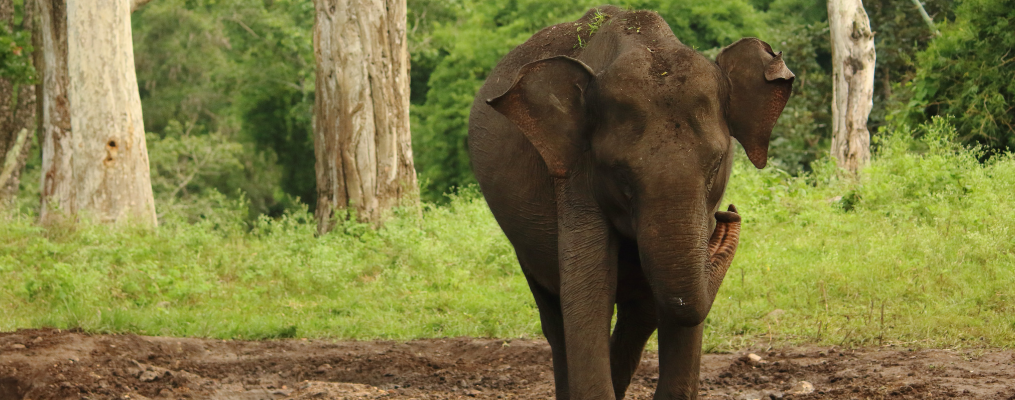
When wildlife and the economy flourish together: A case from India by Vijay Jayaraj Imagine driving from the heart of a city for 50 miles and finding elephants blocking your road! That was the childhood I grew up in, a stone’s throw away from some of the most dense tropical forests of Asia. Though the forests were lush and the environment pleasant, there was a constant stress on the local communities to fight poverty and attain financial stability. This was the story of India during the 1990s. Two decades later, India has not only grown economically stronger, but has also managed to save many of its species through effective, data-driven conservative programs—and is continuing to find ways to save species that are in danger. Conservation in the Midst of Rapid Economic Growth Before the year 2000, India was still a young, developing country. 45% of the population was in poverty during 1993. By 2011 (the latest census), only 21% of the population remained in poverty. Nevertheless, it is estimated that around 218 million people in India still live in “extreme” poverty (less than $1.90 per day). Between 2011 and 2015 alone, more than 90 million people were lifted out of extreme poverty. India’s GDP in 2000 was around US $468 Billion. By 2019, the GDP was valued at US $2.8 Trillion. That is a phenomenal achievement. It would be easy to assume that such a rapid economic progression and the expansion of human settlements would have had a negative impact on India’s wildlife. But that wasn’t the case. It was during the same years that India managed to implement strict conservation measures that would reap immense benefits on even a short-term basis. According to a recent forest census, there has been growth in forest area across the country. Among the many success stories of wildlife conservation was the increase in the tiger population. There were only 1,411 tigers in the year 2006. This number more than doubled during the next 12 years, and by 2018, there were 2,967 tigers. |